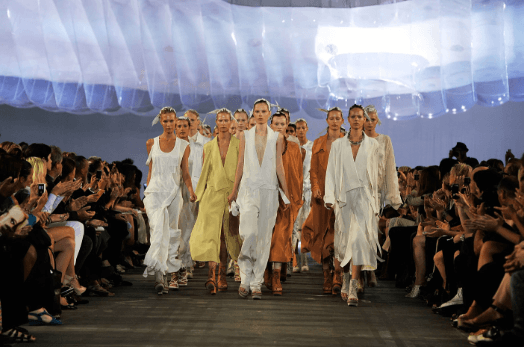
Fashion operates as a visual art form when form, texture, and motif align to convey meaning beyond utility. Garments become portable canvases, signaling mood and culture through silhouette and material choices. The leap from runway to wardrobe hinges on translation: conceptual daring tempered by craft and wearability. This balance prompts questions about identity, collaboration, and perception, inviting sustained reflection on how clothing shapes and mirrors cultural discourse. The discussion ends with an impetus to explore further implications.
How Fashion Becomes Visual Art: A Foundational Lens
Fashion can be read as visual art when garments function beyond utility to communicate meaning through form, texture, and motif, transforming clothing into a portable gallery of ideas.
The foundational lens scrutinizes design choices as cultural signals, where avant garde silhouettes challenge conventions and color theory guides mood, balance, and emphasis, revealing a intentional dialogue between maker, wearer, and observer.
Elements That Make Clothing Read as Artful Expression
If garments are to function as art, their expressiveness rests on a triad of intentionality: form, material, and concept. This triad shapes perception through color psychology and material storytelling, where silhouette, texture, and hue converse to cue emotion and narrative. Evaluative clarity emerges: precision in construction amplifies meaning, while restraint prevents ornament from overpowering concept, preserving the work’s interpretive freedom.
From Runway to Wardrobe: Translating Artistry Into Everyday Style
From Runway to Wardrobe: Translating Artistry Into Everyday Style examines how runway experimentation can translate into wearable nuance without sacrificing artistic intent. The analysis traces how bold silhouettes, textures, and color stories migrate into daily ensembles while preserving conceptual core. It highlights balance between statement artistry and practical wear, where artistry in wear becomes an accessible, self-defining language rather than spectacle. runway to wardrobe.
The Cultural and Creative Impacts of Fashion as Visual Art
The cultural and creative impacts of fashion as visual art extend beyond clothing to shape collective aesthetics, critique, and identity in ways that persist across communities and time.
The field interlocks fashion houses with gallery collaborations, turning garments into wearable sculpture.
Color theory and texture symbolism inform performance couture, digital couture, and anti fashion protests, redefining perception, value, and freedom through innovative, critical formalism.
See also: The Difference Between Public and Private Blockchains
Frequently Asked Questions
How Does Fashion Influence Personal Identity Across Cultures?
Fashion shapes personal identity by weaving fashion identity and cultural symbolism into daily wear, revealing shared values and individual rebellion. It negotiates tradition and modernity, offering freedom to reinterpret culture while maintaining belonging within diverse communities.
Can Fashion Be Considered a Standalone Art Movement?
Fashion cannot be a standalone art movement; it functions as fashion as movement within broader cultural dialogues, shaping gallery fashion perspectives while provoking evaluative questions about authorship, temporality, and viewer agency in an increasingly freedom-seeking audience.
What Role Do Materials and Craftsmanship Play in Fashion’s Art Status?
Materials and craftsmanship anchor fashion’s art status, though not exclusively; textiles craft and atelier technique elevate expression, revealing intention and process. The role is evaluative, nuanced, and liberating, recognizing technique as meaning rather than adornment per se.
How Do Audiences Curate Meaning From Fashion-As-Art Experiences?
Audiences curate meaning through personal contexts, guiding meaning construction by selecting motifs, associations, and emotions. In fashion-as-art experiences, interpretation is not fixed; it evolves with cultural cues, individual memory, and collective discourse, yielding nuanced, freedom-saturated insights.
What Are Ethical Implications of Treating Fashion as Art?
The theory holds that ethical implications arise when considering what it means to treat fashion as art; thus, treat fashion’s autonomy with scrutiny, balancing innovation against labor rights, cultural representation, and sustainability within a freedom-loving, critically attentive public.
Conclusion
Fashion operates as a portable gallery, translating concept into wearable form. Its power lies in how silhouette, texture, and motif fuse to communicate meaning beyond utility. The shift from runway to wardrobe democratizes interpretation, inviting daily life to participate in artistic discourse. Anecdote: a thrifted jacket, once a runway prototype, becomes a personal storyboard, proving design can recycle significance. Data point: global fashion’s cultural impact index rises when designers foreground narrative. Thus, clothing remains a disciplined art that reshapes identity and perception.
